Is corporate design the oldest profession?
John David Lloyd, 2026
I sometimes wonder if the practice of corporate identity design is the oldest profession, even though there is another long-established activity that is usually given that title. By corporate identity design I mean the use of visual and non-visual devices to help build and reinforce a sense of community.
There is evidence that artists and designers have been around since the dawn of humanity and it is believed that their art was conceived as a tool or weapon of the social group in its struggle for survival. Shells containing pigment residues have been found at archaeological sites and are thought to indicate that early man’s archaic contemporaries, the Neanderthals, used body paint and shell jewellery 50,000 years ago. Neanderthals also collected feathers for decorative purposes and produced cave art that pre-dates the work of humans. Experts refer to the use of such decorations as symbolic behaviours. It seems that Neanderthals were using art to reflect social identity.
Scholars believe that cave paintings by humans from the Paleolithic age dating from 30,000 – 10,000 years ago helped strengthen the hunters’ sense of power over their prey and played a role in rites and ceremonies in which shared actions helped to coordinate effort and connect individuals to the social group.
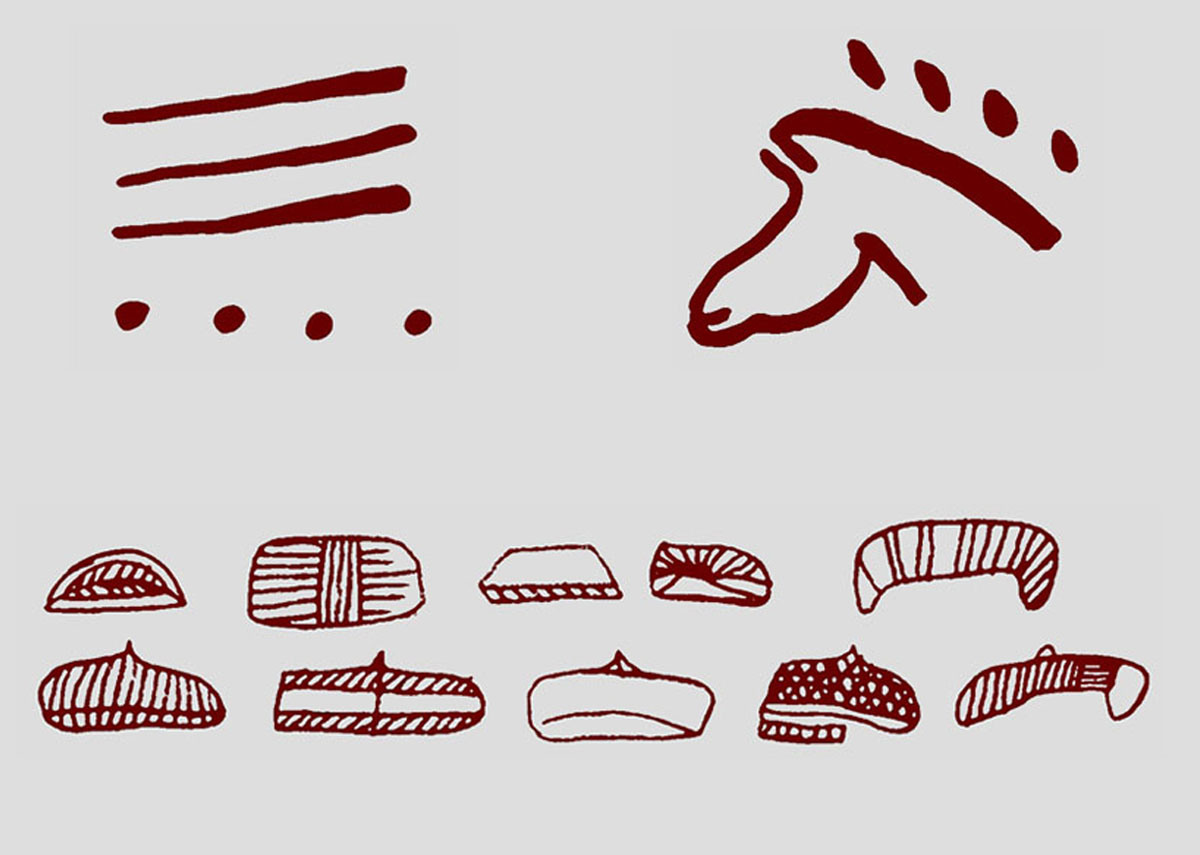
Shamanism, with its associated magical-religious practices, is likely to have played a part. To conjure, in the depths of dark caves, such precise renderings of creatures on which the community depended was a kind of magic and a belief in the power of images. It is not possible to be absolutely certain about the purposes of cave art but it does seem that, for early mankind, the decisive function of Paleolithic image-making was practical: to assist in influencing the worlds of good and evil spirits for a variety of purposes, such as to enable good hunting, to cure the sick, and to forecast the future – and that in doing this, art helped to strengthen the bonds within the society. The caves were not decorated for aesthetic reasons and they were rarely intended for permanent habitation; they, and the art they contained, were contrivances to be used for the benefit of the social group.
Primitive society comprised a close-knit form of collectivism. The community provided protection and the means of survival. Separation from the group or tribe meant death. Art in all its forms was a key social activity, binding the social group together and building a sense of belonging.
Scholars have also noted that, with the emergence of modern humans, we see, from about 30,000 years ago, an acceleration of language development and a sudden proliferation of symbolic items, pictograms, jewellery, figurines, cave art, and musical instruments and that these were used for social membership purposes.
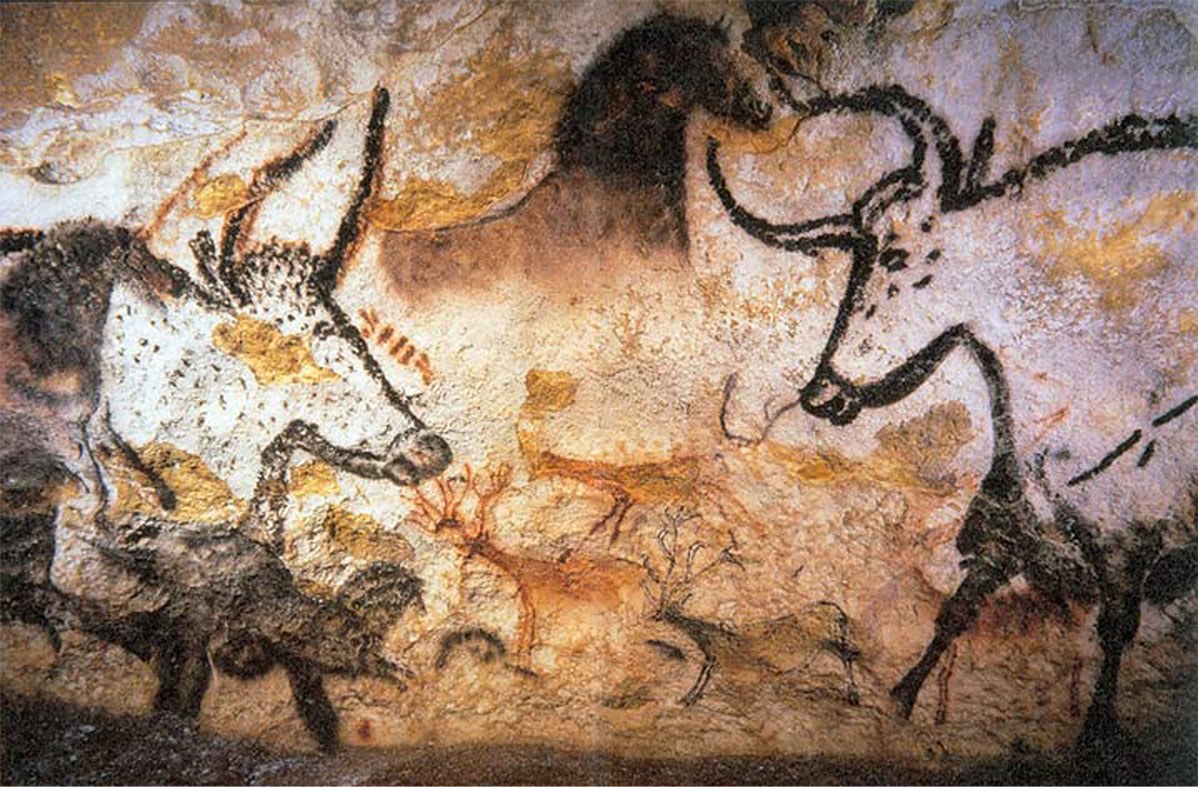
The caves at Lascaux in France and Altamira in Spain are among many Upper Paleolithic sites that date from about 18,000 years ago and contain highly sophisticated and accomplished visual imagery. Many examples of art from this period include geometric signs. In Cueva de la Pasiega in Spain there are, as well as paintings, numerous graphic marks and symbols, the meanings of which are not understood, but which may be a kind of proto-writing, a precursor of written communication. During this period regional cultures developed. Bands of twenty to twenty-five family members would join with as many as twenty other similar sized family groups to form larger tribes. Ethnic identity – the idea of associating with a much larger integrated cultural group, even without family ties – began to develop. It is possible that some Upper Paleolithic symbols and signs were used to represent different ethnic groups.
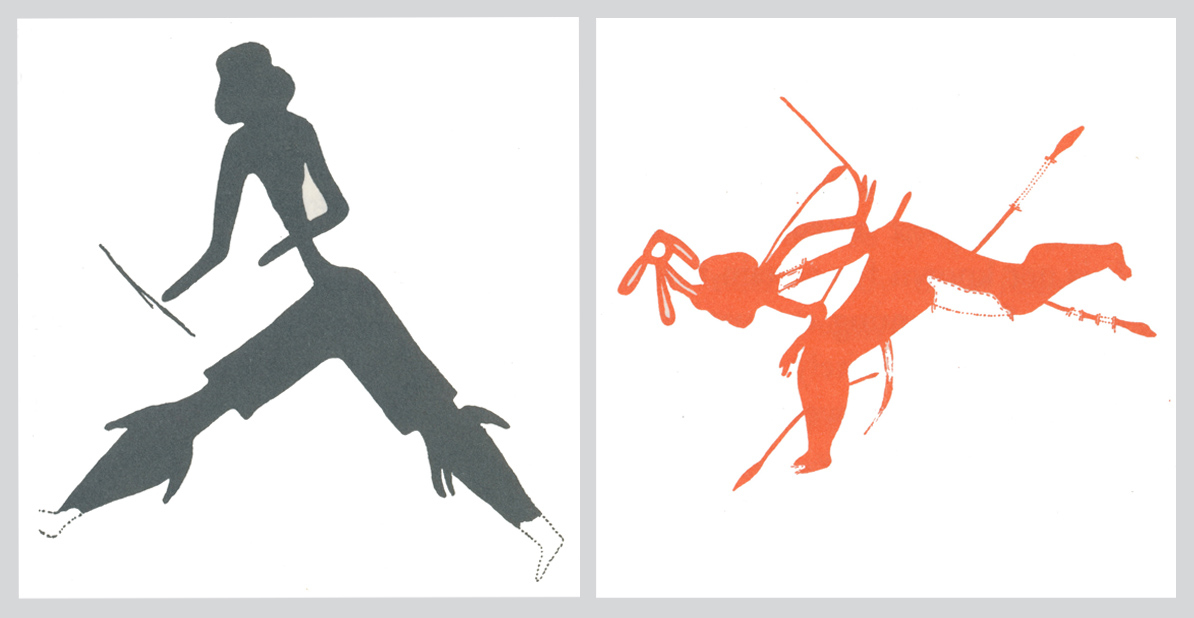
Rock art from Teruel in South East Spain dating from 8,000 – 5,000 years ago shows that early societies developed distinctive clothing and adorned themselves with feathers and personal ornaments. They also painted their bodies and used war paint.
Similar examples from pre-history can be found around the globe in the Americas, Australasia, Africa, Asia Pacific, and the Middle East.
The first human societies were based on a hunting-gathering economy and such a system has persisted among the Australian Aborigines and African Bushmen, providing opportunities for the study of existing hunter-gatherer cultures. Anthropologists working in Central Australia have observed that, to express the collective force of their group and provide a concrete sense of social unity, Aborigines use symbolic objects and works of art in rituals. In West Africa, studies have found that the Lega, a forest-dwelling people, used art objects to project ideals of good leadership and to signal levels of membership within the community.
It is clear that, in pre-historic times, art was used as an expression of the individual and as a tangible focus for the cohesive group. A strong sense of corporate identity was essential to the survival of early mankind.
And, artists and designers were there, creating the images, signs and symbols of corporate belonging, right from the start.